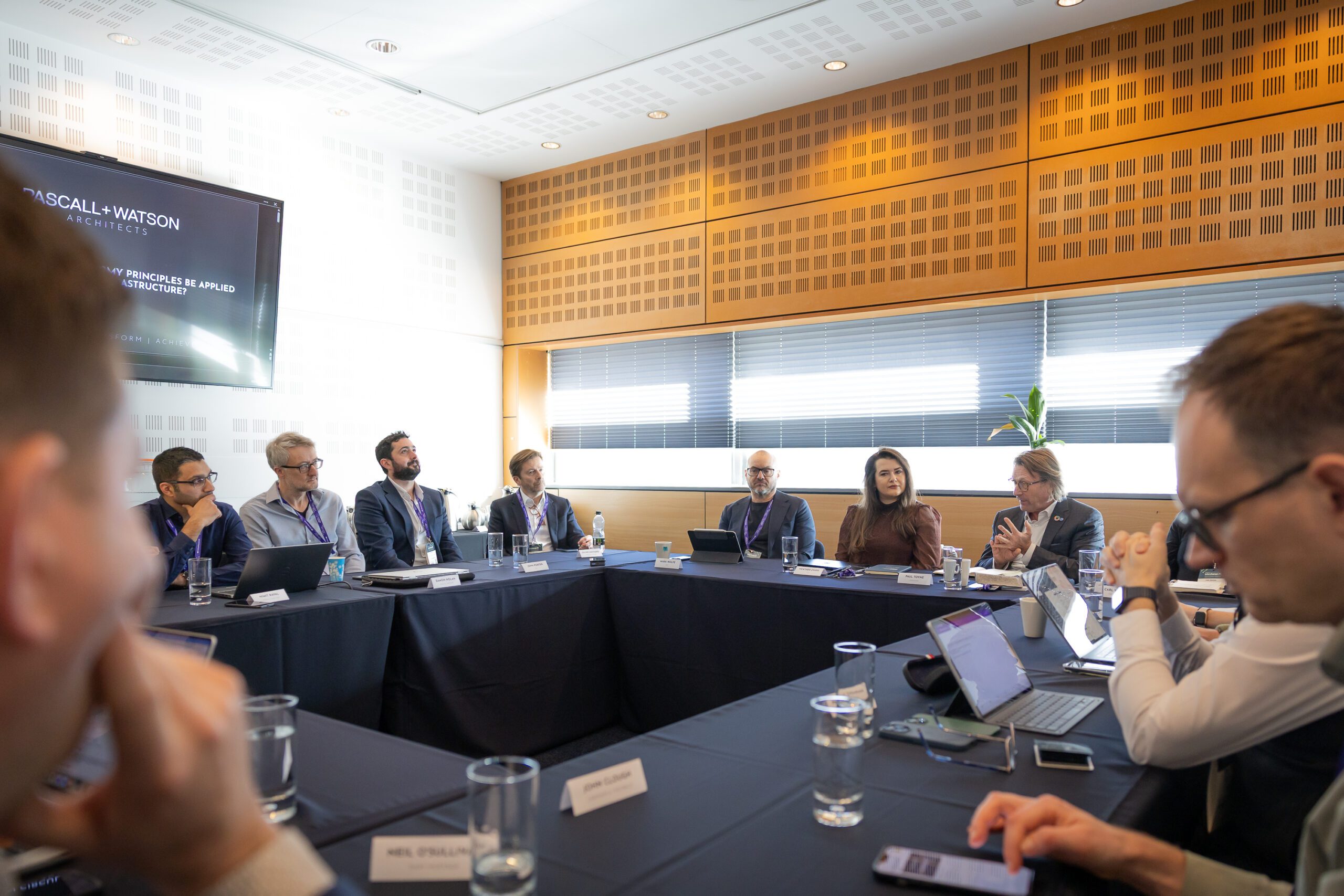
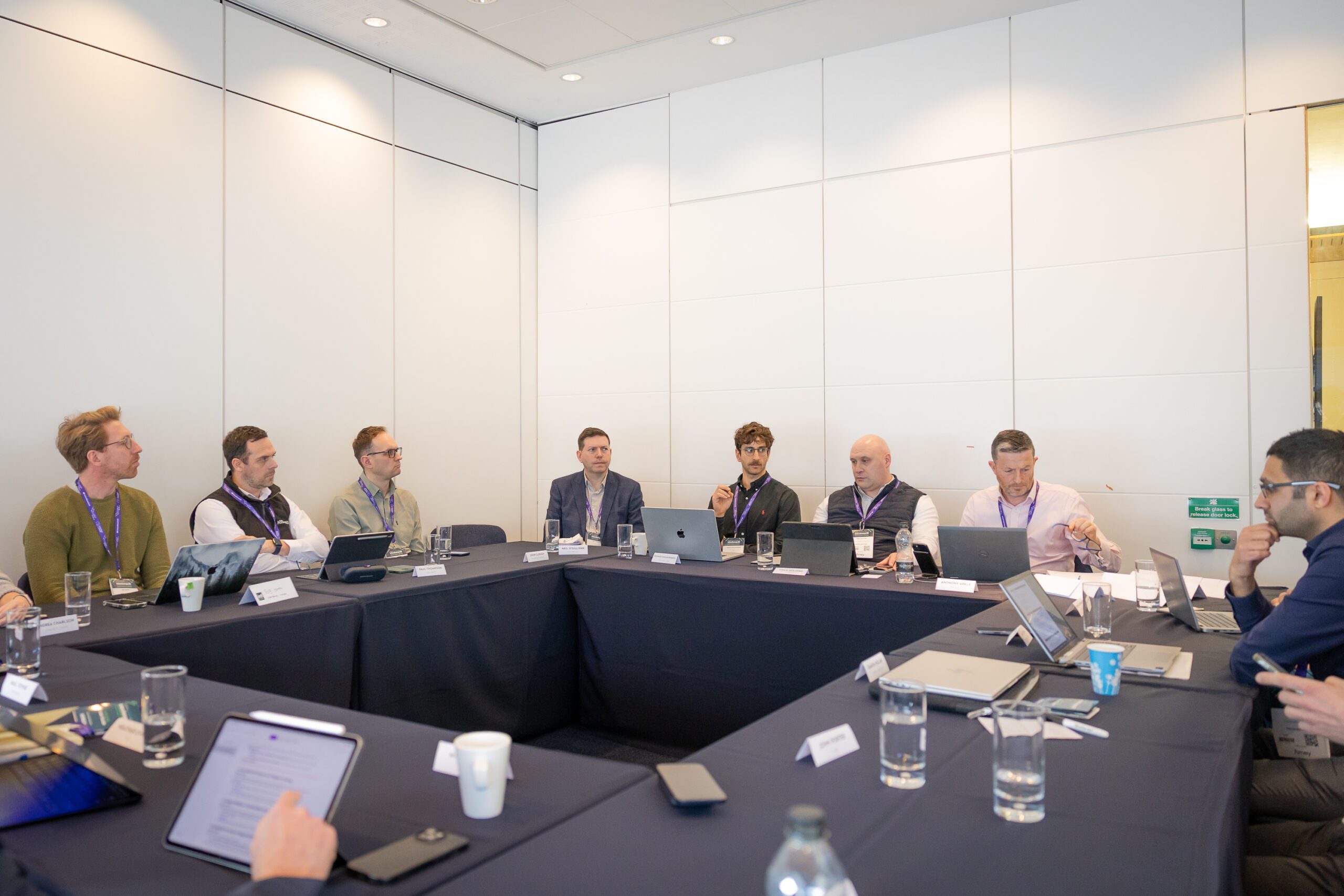
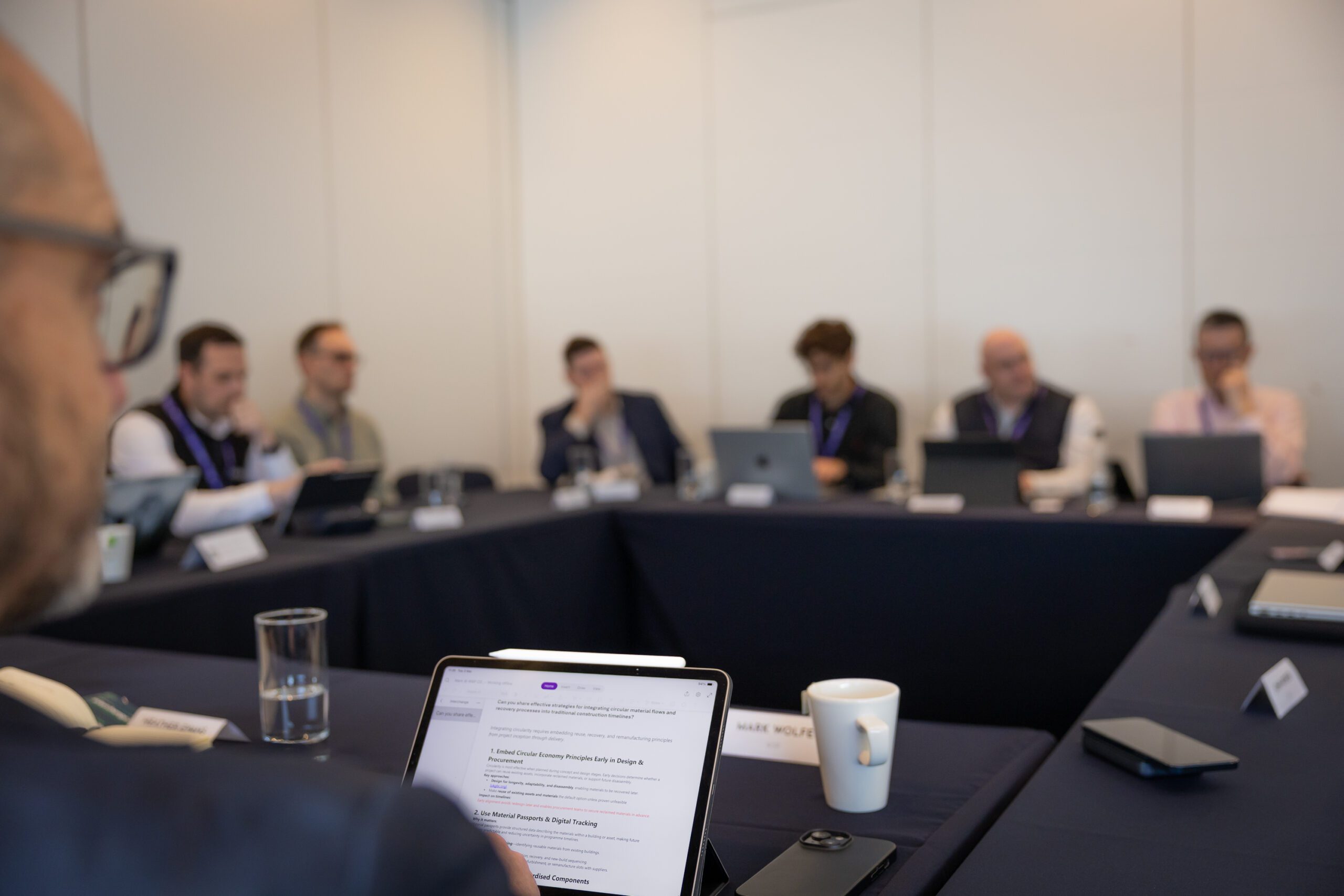
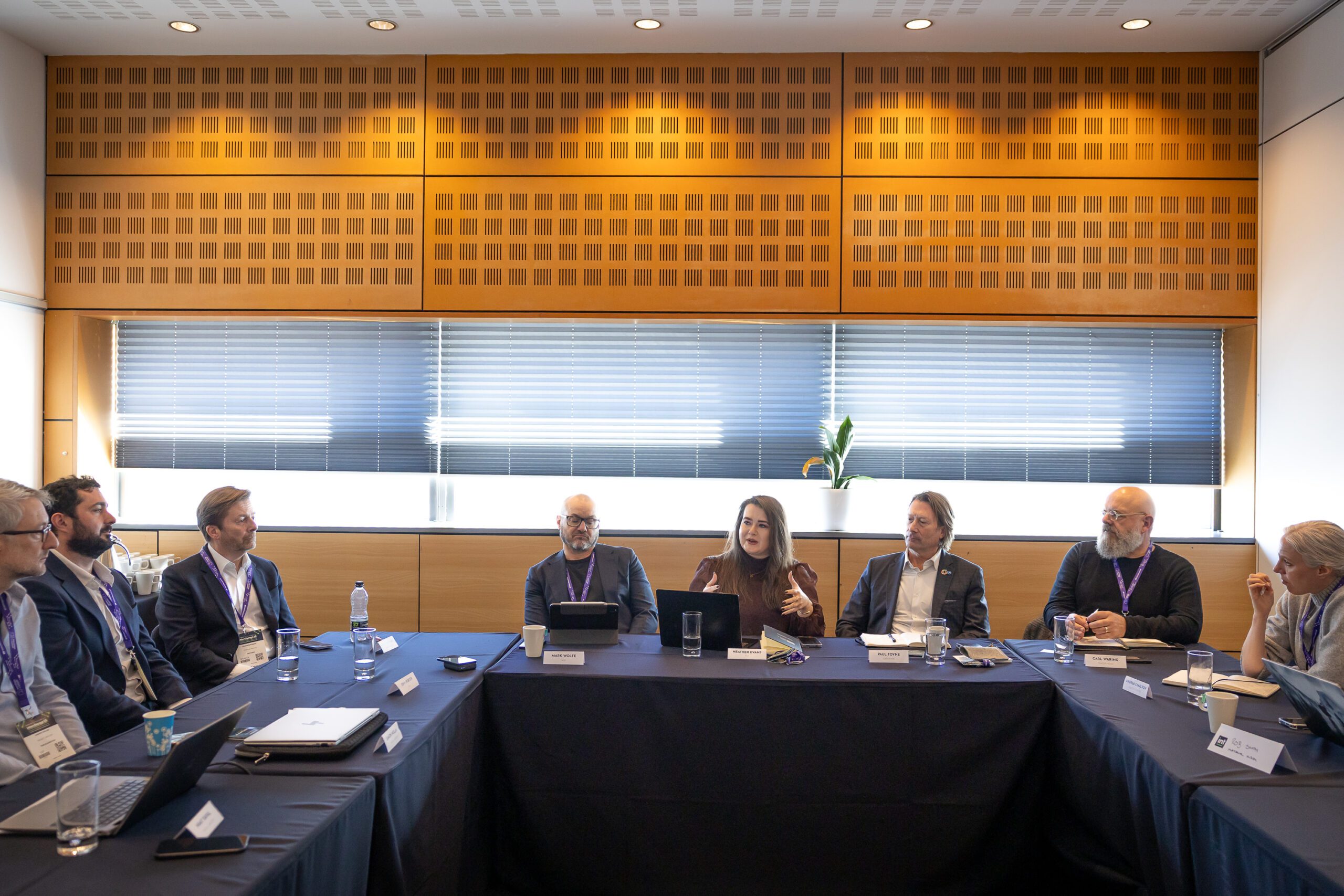
Pascall+Watson’s Sustainability Associate, Nimit Raval, recently co-chaired an expert roundtable at Interchange 2026, bringing together leading voices from across the transport infrastructure sector to explore how circular economy principles can move from ambition to action.
The discussion focused on establishing a shared understanding of circularity, with participants identifying three core principles: designing out waste, keeping materials in use at their highest value, and regenerating natural systems. While these concepts are widely understood, attendees agreed that the real challenge lies in changing commercial models, behaviours and policy to enable widespread adoption.
As Paul Toyne of Grimshaw asked: “How do we design our assets for the future that can contribute to a regenerative outcome?”
Meanwhile, Andrea Charlson of Concrete Centre highlighted the positive impact infrastructure projects can have by adopting circular economy principles; “Major infrastructure projects can provide clear market signals. The strategic decisions are being made way, way, way in advance from when any of the materials or products are going to be required.” In turn, influencing a sector shift.
The session also explored the importance of whole-life carbon, material reuse, collaboration and social value as key drivers of change.
This is a four-part thought leadership series developed from the discussion. To explore the insights, expert perspectives and practical recommendations in full, read more in the accompanying whitepapers:
This four-part series presents findings from a Roundtable organised by Pascall+Watson, hosted at Interchange in Manchester, UK, in early 2026.Interchange is one of the UK’s leading annual conferences and exhibitions focused on integrating transport infrastructure, technology, and city planning. The event brings together industry leaders to discuss decarbonisation, amongst other topics.
Circular Economy in Transport Infrastructure – Part 1
This is the second paper in Pascall+Watson’s four-part insight series on Circular Economy in Transport Infrastructure, drawn from the Interchange 2026 Roundtable. Part One explored the foundational principles of the circular economy. This paper examines how material information can be captured, managed, and used to enable circular outcomes in practice. Each paper in this series focuses on one of the four core themes discussed.
Circular Economy in Transport Infrastructure – Part 2
This is the third paper in Pascall+Watson’s four-part insight series on Circular Economy in Transport Infrastructure, drawn from the Interchange 2026 Roundtable. Parts One and Two explored the foundational principles of the circular economy and the role of material passports. This paper examines the practical delivery challenges that arise when circular ambitions meet the realities of live infrastructure construction. Each paper in this series focuses on one of the four core themes discussed.
Circular Economy in Transport Infrastructure – Part 3
This is the fourth and final paper in Pascall+Watson’s four-part insight series on Circular Economy in Transport Infrastructure, drawn from the Interchange 2026 Roundtable. The series has explored the foundational principles of the circular economy, the role of material passports, and the challenges of project delivery. This paper examines the policy, regulatory, and procurement landscape and what must change to move the sector from isolated good practice to systemic transformation.
Circular Economy in Transport Infrastructure – Part 4