
Foundations of Circularity
This four-part series presents findings from a Roundtable organised by Pascall+Watson, hosted at Interchange in Manchester, UK, in early 2026.Interchange is one of the UK’s leading annual conferences and exhibitions focused on integrating transport infrastructure, technology, and city planning. The event brings together industry leaders to discuss decarbonisation, amongst other topics.
Our roundtable brought together leading professionals from across the built environment sector to explore how circular economy principles can be embedded across the full lifecycle of transport infrastructure projects. Each paper in this series focuses on one of the four core themes discussed.
- – Foundations of Circularity
- – Material Passports and Digital Documentation
The scale of the challenge facing the construction and infrastructure sector is significant. The statistics alone make the case for change:
- – Construction and demolition generate more than 35% of the EU’s total waste [1].
- – The built environment is responsible for circa 25% of the UK’s greenhouse gas emissions [2].
- – Buildings use about 50% of all extracted materials in Europe [3].
- – The EU circular material use rate reached just 11.8% in 2023 [4].
- – Yet, the Netherlands has already achieved 30.6%, demonstrating what is possible with the right frameworks in place [5].
The linear model of “take, make, dispose” is no longer sustainable, environmentally, economically, or socially. But before the sector can act, it must first establish a shared understanding of what the circular economy means, and what it demands of us. That is the starting point for this series.

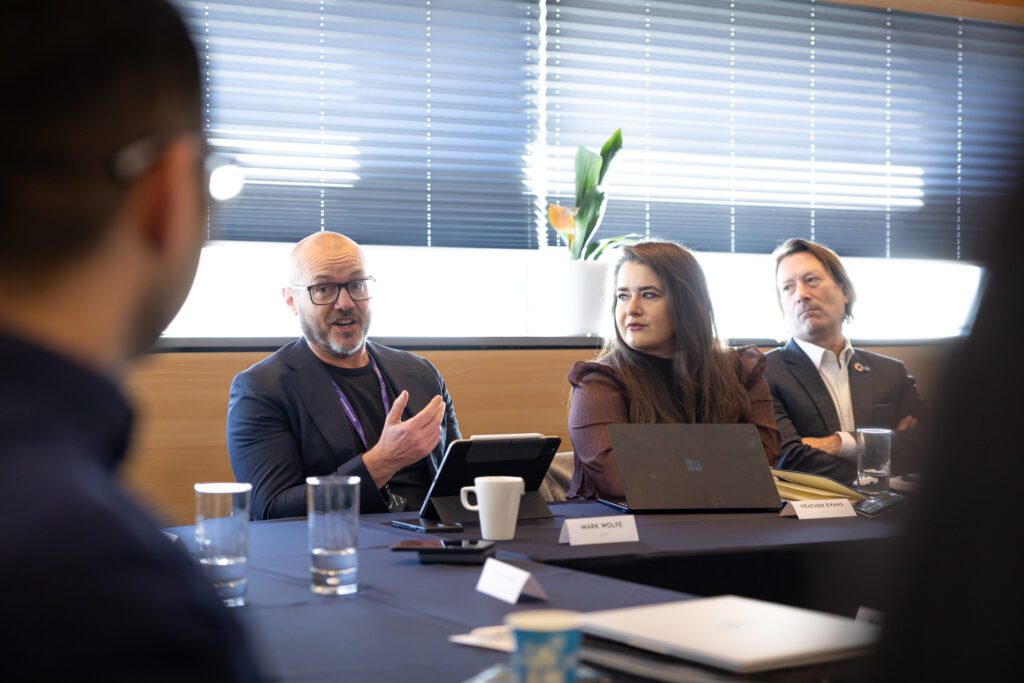
Principle 1: Design out waste and pollution
The first and most widely understood principle focuses on preventing waste before it occurs, rather than managing it after the fact. This means challenging the very concept of “waste”, reframing it not as an inevitable by-product of construction but as a symptom of poor resource management.
Principle 2: Keep products and materials in use at their highest value
The second principle focuses on extending the lifecycle of products and materials, replacing the linear model with a circular one based on reuse, repair, remanufacturing, and recycling. Participants noted that much of the current activity in UK transport infrastructure, refurbishing and improving ageing assets, already embodies this principle in practice.
Principle 3: Regenerate natural systems
The third principle, and the most challenging to deliver, goes beyond harm reduction to active regeneration. The goal is not merely to do less damage to natural systems, but to design infrastructure that actively contributes to their restoration and resilience.
“How do we design our assets for the future that can contribute to a regenerative outcome? And that takes you into our world, in architecture, regenerative design”
Paul Toyne | GrimshawREFRAMING THE VALUE OF VALUE
A significant theme within the discussion was the tension between circular economy principles and prevailing economic models. If circularity encourages less consumption and greater material efficiency, how does this sit within an economic system built on continuous growth?
“There's a whole series of interventions, and some of them are design-based, and some of them are changes to commercial business models that we need to start using to get to where we want to go” Andrea Charlson | The Concrete Centre
“We do need to redefine value, but in a way people can actually measure and apply commercially to projects, because ultimately that’s what drives decision-making. Otherwise, we’re not going to get the conversations or the outcomes we need.”
Heather Evans | RLBThe most resonant response was a call to reframe the value of value. Current commercial frameworks are largely immature at capturing the full social, environmental, and economic value of circular approaches. Whole life cost and whole life value, particularly relevant for transport infrastructure clients who, as long-term asset owners, stand to benefit most from upfront circular investment, were identified as underutilised but powerful tools.
“You need three things, enabling conditions, effective collaboration and clear visibility of shared long term goals. This behaviour already exists but is not main stream. You only need a few actors and stakeholders to change behaviours and the rest will follow”
Carl Waring | Frazer Nash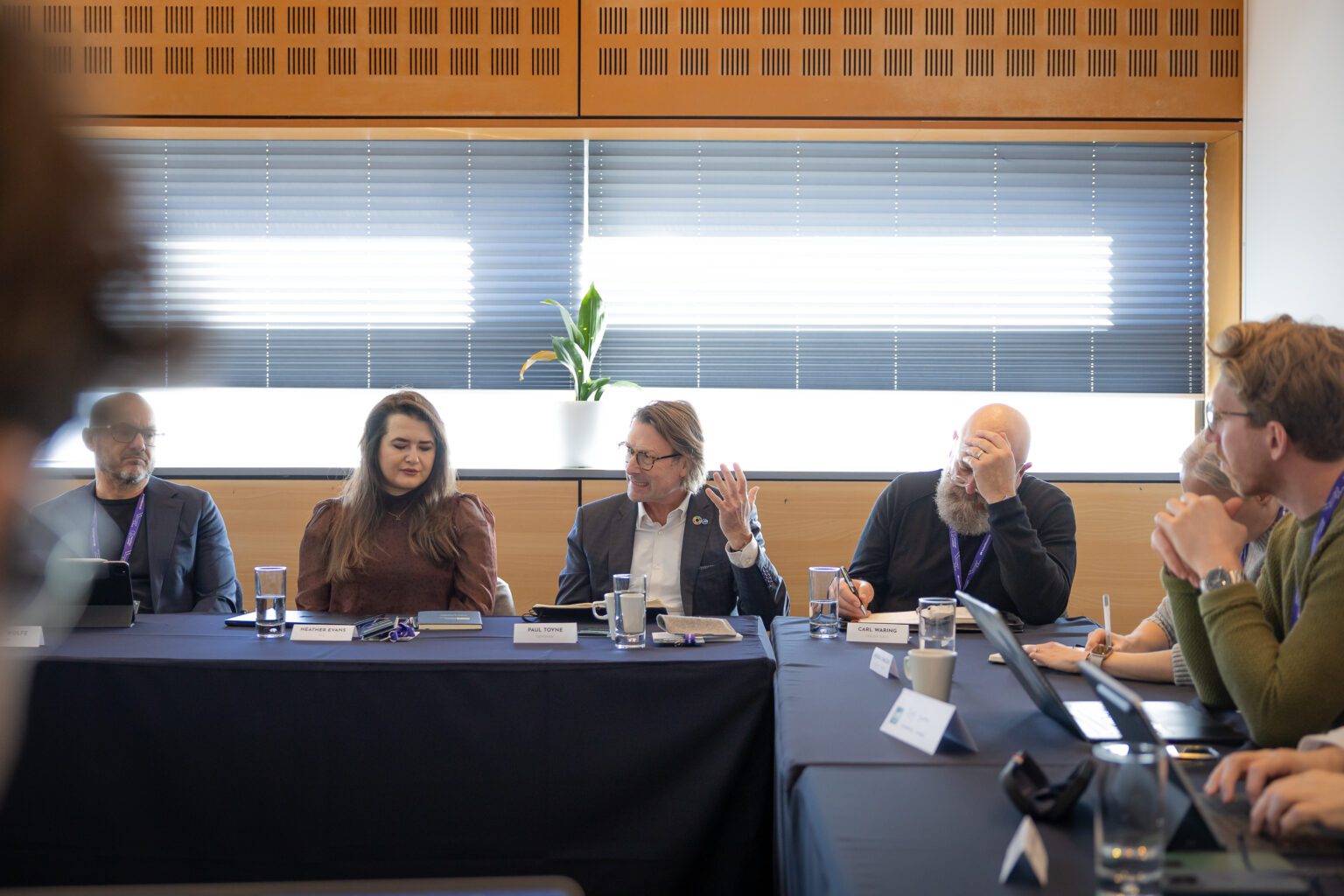
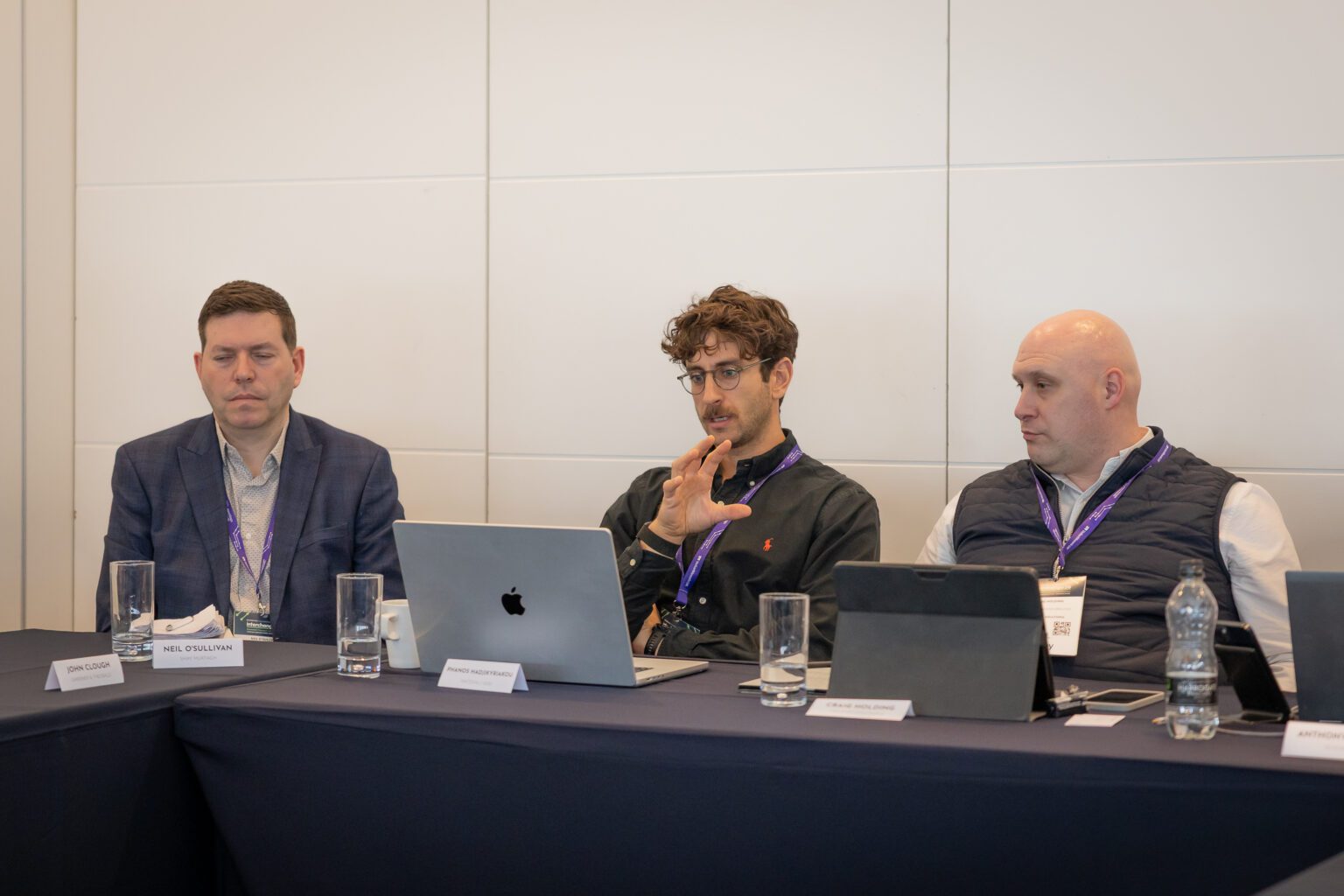
Decarbonisation offers the most accessible entry point. By framing circularity around whole-life carbon reduction, a metric already high on the agenda of most infrastructure clients, practitioners can begin the conversation in familiar territory and then progressively introduce broader social and environmental dimensions. When applied to high-impact systems such as MEP installations, which can account for up to two-thirds of a major airport building’s whole-life carbon, this focus helps direct circular-economy efforts where they deliver the greatest return.
“Asset owners are interested in risk reduction, as downtime for an airport or rail can be significant. Material scarcity and volatility of price will be seen as increasing risks in the future”
Georgina Chamberlain | Buro Happold“The challenge here is for clients thinking about dematerialisation, because that saves money and saves carbon”
Paul Toyne | GrimshawEQUITY AND SOCIAL VALUE
Participants were consistent in their view that equity cannot be an afterthought in the transition to the circular economy. Transport infrastructure exists to serve society, and the shift to circular models must be pursued in a way that is fair, accessible, and genuinely value-creating. The creation of the right kinds of jobs, in local manufacturing, remanufacturing, and material recovery, was identified as a critical component of a just and inclusive circular transition.
CONCLUSION
Throughout the discussion, participants consistently returned to questioning: given a clear and shared understanding of where we want to be, how do we get there?
There was broad acknowledgement that the principles are well understood. The challenge lies in navigating the systems, incentives, and entrenched behaviours that currently work against their implementation. The consensus was that this requires parallel action across design practice, commercial models, and policy, with no single lever sufficient on its own. The remaining three papers in this series explore those levers in detail.
KEY TAKEAWAYS
- – The three core principles, designing out waste, keeping materials in use, and regenerating natural systems, provide a clear and actionable framework for the transport infrastructure sector.
- – Commercial frameworks for valuing circular approaches need to be developed. Whole-life value and whole-life carbon are the most effective entry points for client engagement.
- – The refurbishment and adaptation of existing transport assets is a circular economy practice in action. The sector should recognise, celebrate, and build on this.
- – Equity and social value must be central to circular economy ambitions, not peripheral considerations.
- – The principles are understood. The priority now is delivery.
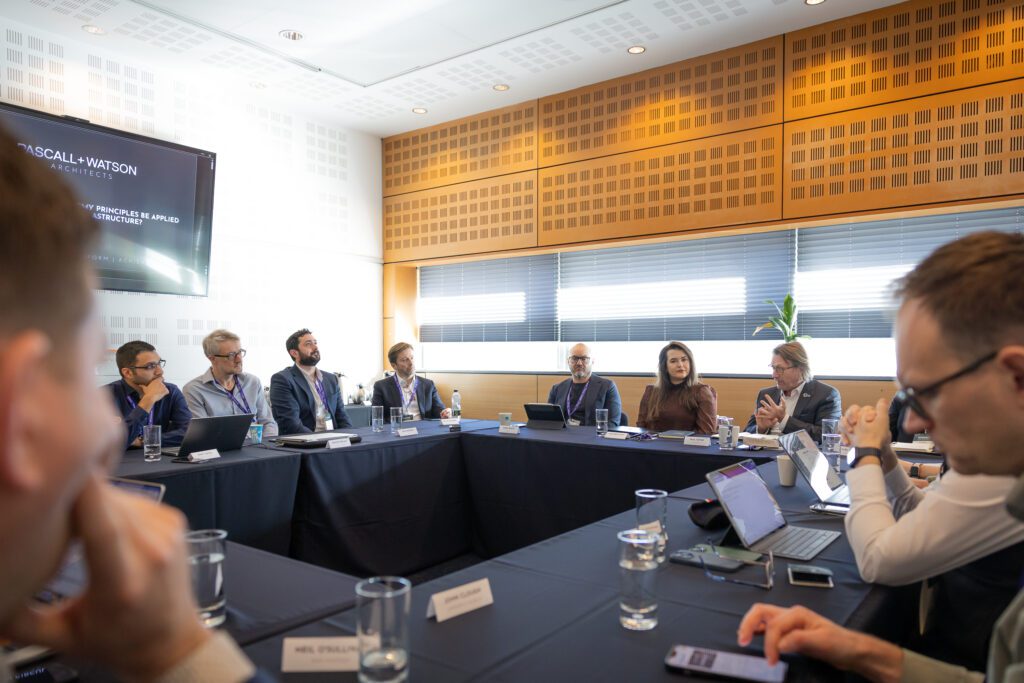
PART TWO: MATERIAL PASSPORTS AND DIGITAL DOCUMENTATIOn
How do we capture, manage, and use material information to enable circular outcomes?
CHAIRS |
|
|
| Nimit Raval | Pascall+Watson | Associate: Sustainability |
| Eamon Nolan | Pascall+Watson | Project Director |
PARTICIPANTS |
|
|
| Phanos Hadjikyriakou | 2050 Materials | Co-Founder & CEO |
| Paul Thompson | Assa Abloy | Head of Specification |
| Georgina Chamberlain | Buro Happold | Associate Director |
| Andrea Charlson | Concrete Centre | Senior Sustainability Specialist & Circular Economy Lead |
| Craig Holding | Dolphin Solutions | Client Relations Executive |
| Carl Waring | Frazer Nash | Principal Consultant |
| Paul Toyne | Grimshaw | Head of Sustainability |
| Rob Smith | Material Index | Managing Director |
| Julian Maynard | Maynard Design | Managing Director |
| Heather Evans | RLB | Partner – National Head of Sustainability |
| John Porter | SAS | Sector Development Manager |
| Anthony Arkle | Skanska | Head of Public Affairs |
| Neil O’Sullivan | Shay Murtagh | Group Business Development Manager |
| Mark Wolfe | WSP | Director, Aviation |
IMAGES & PLANNING |
|
|
| Alberto Roa | Pascall+Watson | Marketing Manager |
| Kazz Kumar Williams | Pascall+Watson | Marketing Manager |