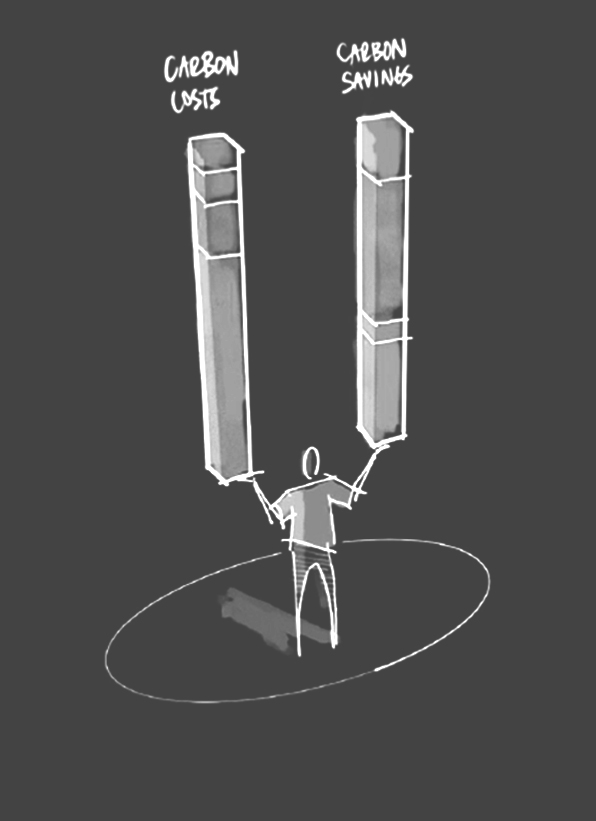
The intensifying focus on heating demand reduction in high-performance buildings must expand to address the growing challenge of cooling requirements. As climate change progresses, the buildings we design today will face dramatically different thermal conditions throughout their operational lifespans, requiring adaptive strategies that maintain comfort while minimising energy consumption and avoiding the environmental pitfalls of retrofitted mechanical cooling systems.
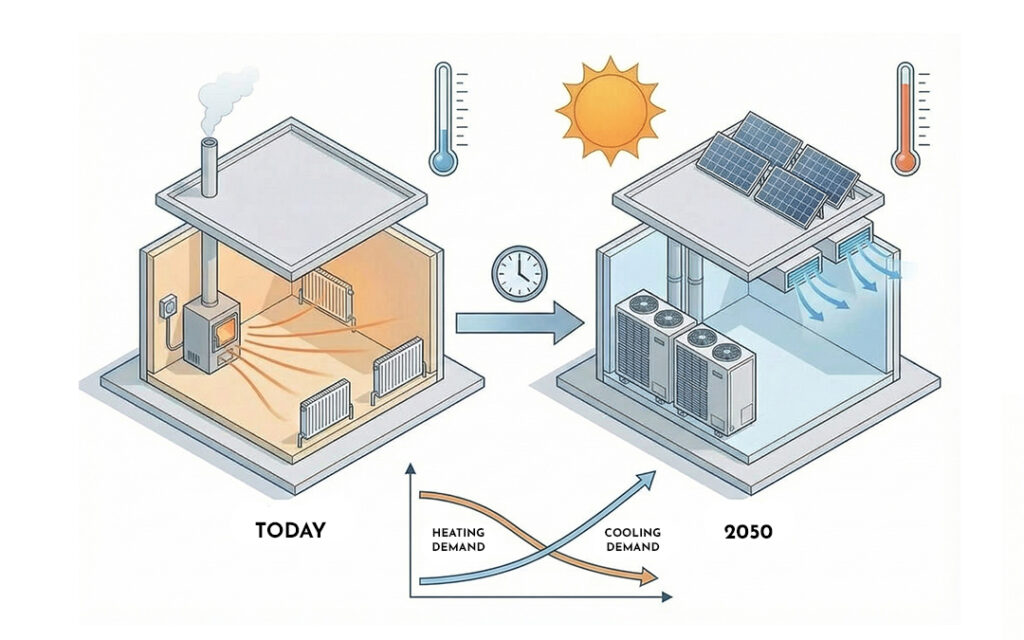
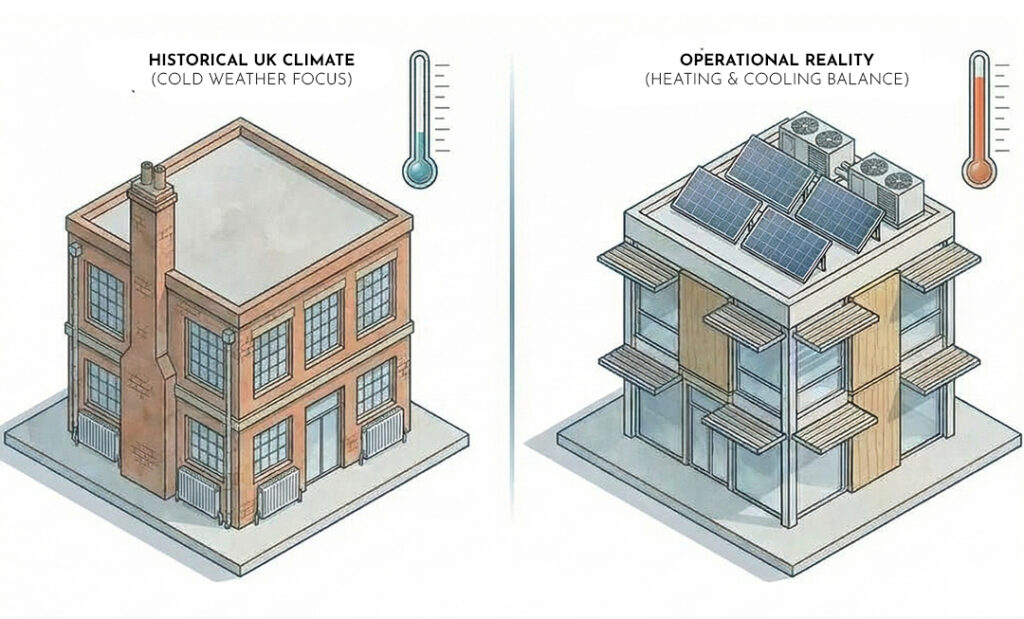
Current building regulations and performance standards primarily address heating demand, reflecting historical UK climate conditions that no longer represent future operational reality. Recent summers demonstrate the inadequacy of buildings designed solely for cold weather performance, while climate projections suggest that by 2050, cooling demands may rival or exceed heating requirements in many building types. This fundamental shift in the energy equation requires immediate attention in current design decisions to avoid costly and environmentally damaging retrofit solutions.
The Passivhaus standard already incorporates comprehensive overheating analysis and cooling demand calculations within its modelling framework, evaluating both summer and winter performance to ensure buildings maintain comfort across seasonal extremes without excessive energy consumption. This methodology anticipates future climate scenarios through advanced weather data modelling, enabling designs that remain viable as conditions change rather than requiring energy-intensive mechanical intervention during their operational lives.
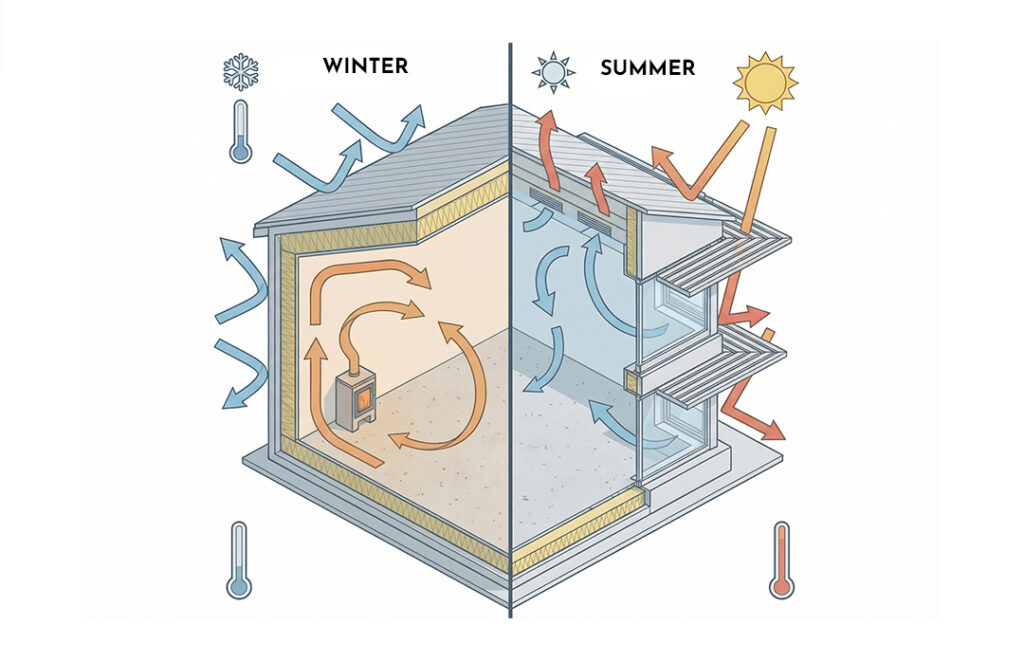
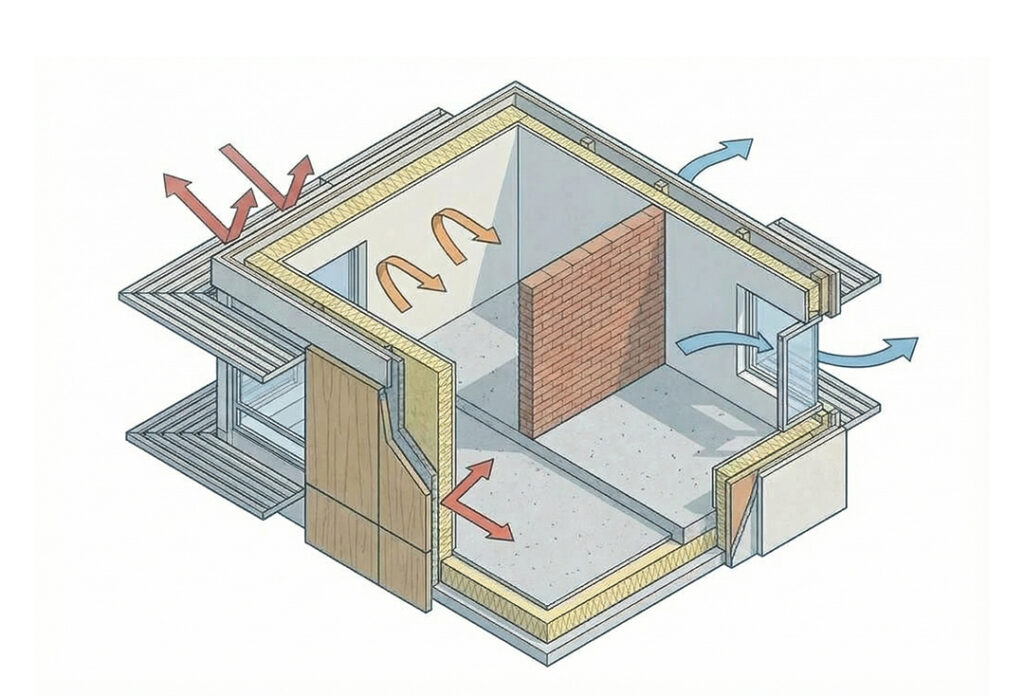
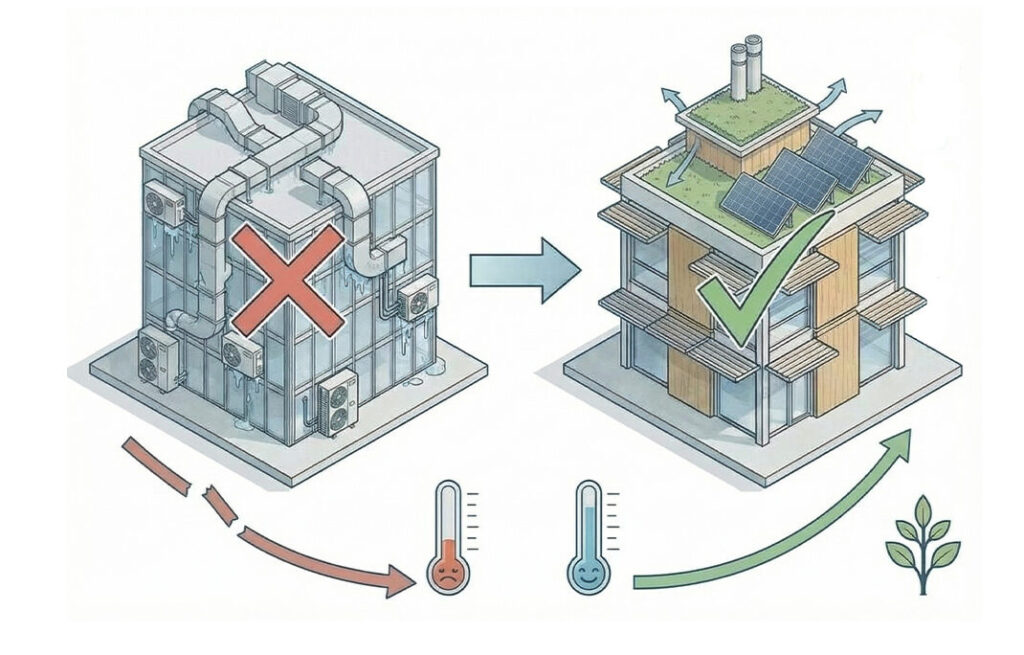
High-performance building fabric provides natural advantages for cooling through superior insulation that works bidirectionally keeping heat out during summer as effectively as retaining warmth in winter. Combined with strategic shading design, thermal mass optimisation, and natural ventilation opportunities, fabric-first approaches can dramatically reduce mechanical cooling requirements while maintaining comfort standards. These passive strategies become increasingly valuable as they avoid the substantial embodied carbon impacts of mechanical cooling systems and eliminate dependence on refrigerants with high global warming potential.
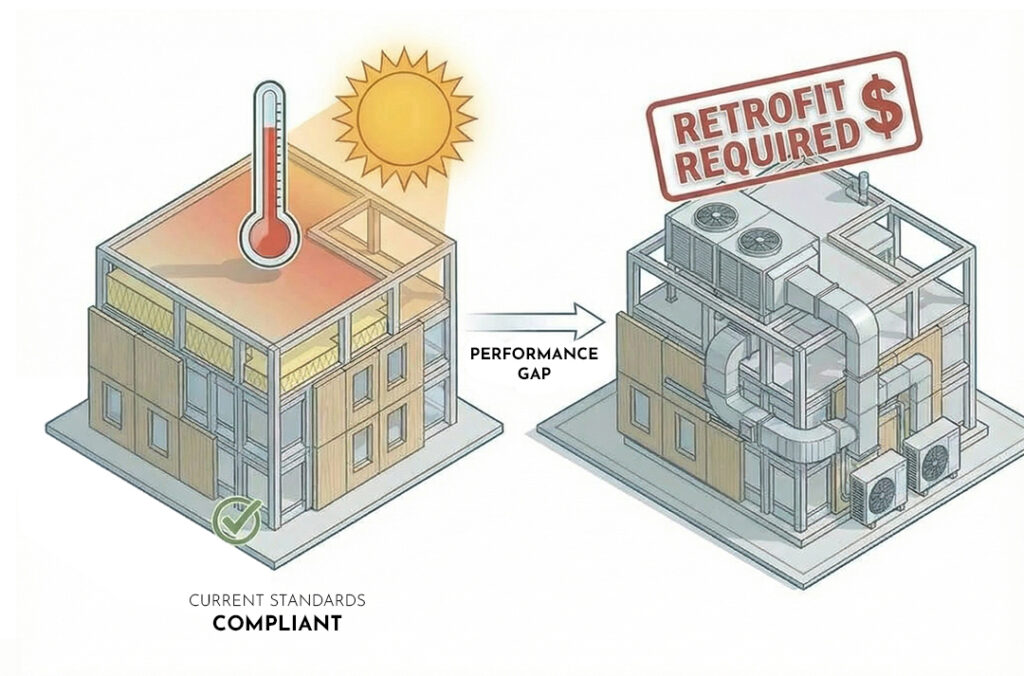
Buildings designed today must anticipate 60-year lifespans under changing climate conditions, making current design decisions critical for long-term viability. Buildings that require retrofit air conditioning systems within their first decades of operation represent both financial and environmental failures, as the embodied carbon of mechanical cooling systems can eliminate the climate benefits achieved through initial high-performance design. Pascall+Watson’s commitment to climate-responsive design ensures our buildings perform effectively under both current and projected future conditions, protecting our clients’ investments while contributing to genuine climate resilience through thoughtful, anticipatory design strategies.