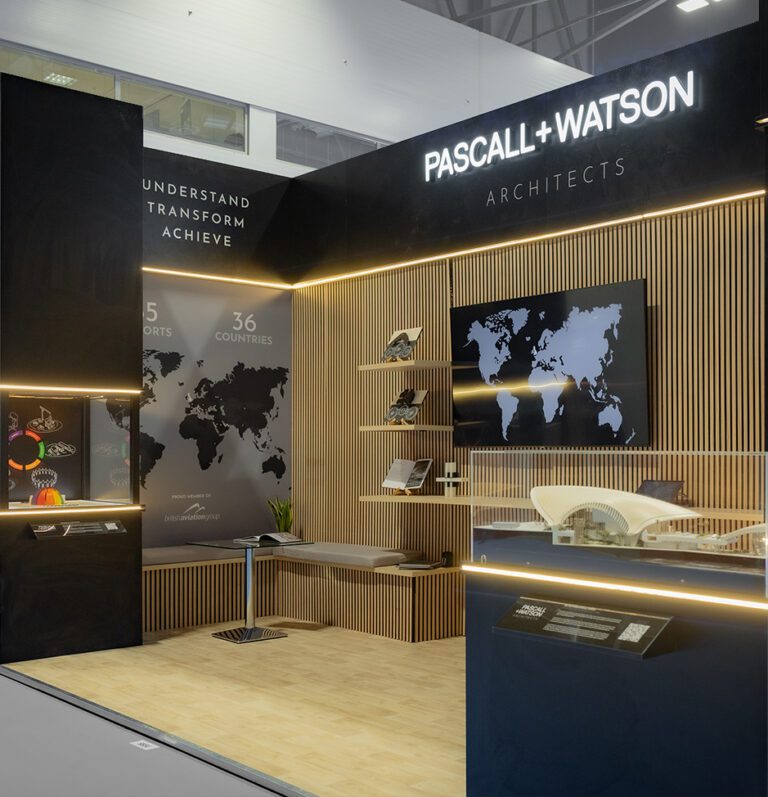
Passenger Terminal Expo 2025 in Madrid was our biggest event of the year. It brought together thousands of global aviation leaders to shape the future of terminal design. For us, it was a key brand moment and a chance to connect with clients, share ideas, and demonstrate how collaboration drives design excellence at Pascall+Watson Architects.
Our stand this year focused on visibility, storytelling, and industry engagement. With striking design, detailed project models, and a full marketing campaign, we positioned our brand as thought leaders in aviation. It sparked conversations with airport operators, consultants, and industry leaders—allowing our team to connect, share insights, and showcase our vision for sustainable, future-focused design.
Sustainability Considerations
During the design and manufacturing process, we explored multiple avenues to ensure our stand achieved the lowest carbon footprint possible. This included the number of staff travelling, the materials, power generated from lighting and more. Here are some example outcomes:
– We designed and delivered our stand using less than 1,000 kg CO₂e (that’s roughly the same carbon footprint as a one-way flight from London to New York for one person).
– Local crew members in Madrid were employed to execute the stand construction, to reduce CO2 emissions.
– The stand materials have been recycled, reused or repurposed. For example, the vinyl flooring has been donated to a local animal shelter.
Red Sea Airport Model
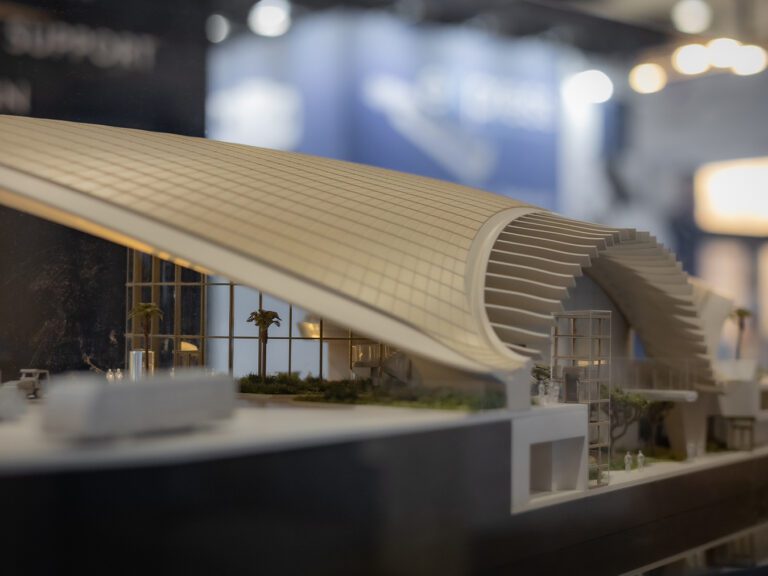
One of our standout features was the new sectional model of Red Sea International Airport, a visually striking piece that drew a lot of attention from attendees and sparked valuable conversations.
The model showcases the terminal’s complex geometry, providing a detailed look at both the arrivals and departures journey, and highlighting the airport’s biophilic design principles, including lush internal gardens that promote wellbeing and connect passengers with nature.
As the airport is close to completion, the new model serves as an impressive representation of the progress being made on site.
We are excited to share that it will be coming soon to the office, offering the wider team a chance to view this intricate piece up close.
A huge thank you to everyone who supported the creation of this model, from concept to technical detailing.
Sustainability Model
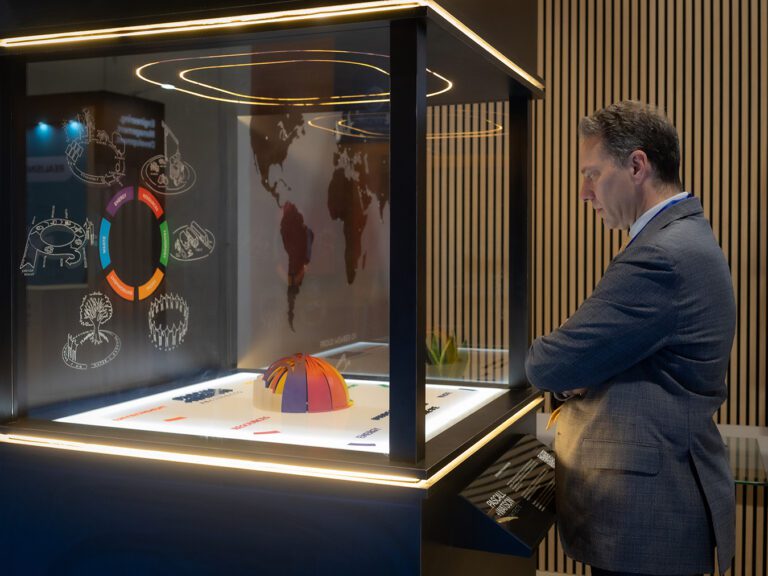
Another highlight from our stand was the Sustainability Model, an interactive 3D art installation that brought our commitment to environmental and social responsibility to life.
What began as a 2D graphic representing the UN Sustainable Development Goals (SDGs) evolved into a 3D-printed model, fully designed and fabricated in-house, a testament to the collaborative spirit between our design and sustainability teams.
The model visualises the six key pillars that outlines our sustainable design philosophy, and was part of a research and development exercise to explore new ways of communicating complex ideas through engaging, tangible formats. It pushed the boundaries of what we can create when we combine cross-team expertise and creative thinking.
Not only was the model a conversation starter throughout the event, it also served as an accessible, easy-to-understand tool that sparked genuine interest from industry professionals, helping them understand our sustainability approach at a glance.
If you’re unfamiliar with our sustainability pillars, visit the sustainability section to learn more.
Wellbeing in Terminal Design
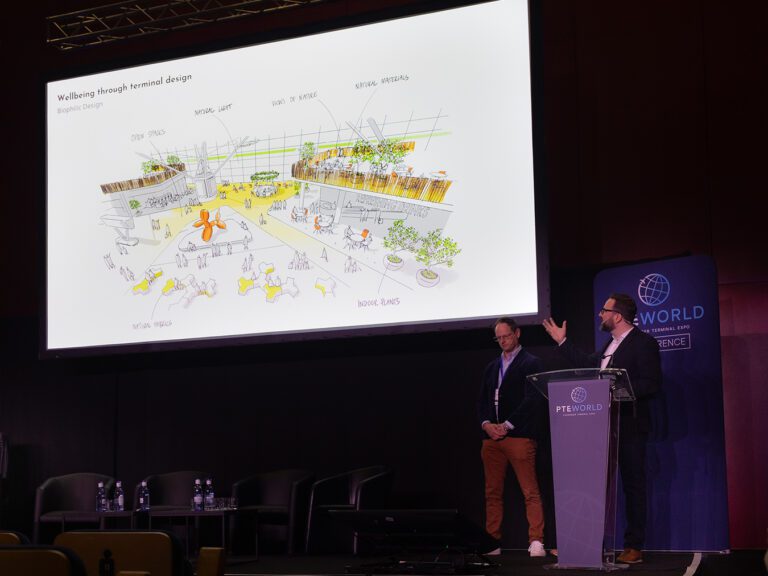
A standout moment during the week was the joint talk delivered by Manuel Cruz, Project Director, and Mike Hardaker from Manchester Airports Group, who took to the stage to present our collaborative design approach for the Stansted Airport expansion project.
Partnering closely with a key client was a real win, not only for the success of the talk itself, but for demonstrating how aligned values and co-creation can elevate the outcome of a major infrastructure project.
Their session explored how passenger wellbeing was embedded into every stage of the design, with Manuel spotlighting the specific strategies our team applied, including:
– Uncluttered, intuitive layouts that reduce passenger stress
– Biophilic design and green elements to connect travellers with nature.
– Zoned spaces for different passenger needs—from quiet zones to sensory-friendly areas
– Smart technology to support wayfinding, service access and personal comfort
– Landmark orientation points and intuitive wayfinding to simplify navigation
The talk was well attended and sparked conversations around how terminal design can become a powerful tool for passenger comfort, brand experience and operational success.