P+W Complete Decade-Long £1.3bn Manchester Airport Transformation
Visionary architectural strategy delivers 30% capacity increase while reimagining the passenger experience
International architecture practice Pascall+Watson has completed the Manchester Airport Transformation Programme, a decade-long £1.3 billion investment that has fundamentally reimagined Terminal 2 as a world-class gateway for the North West.
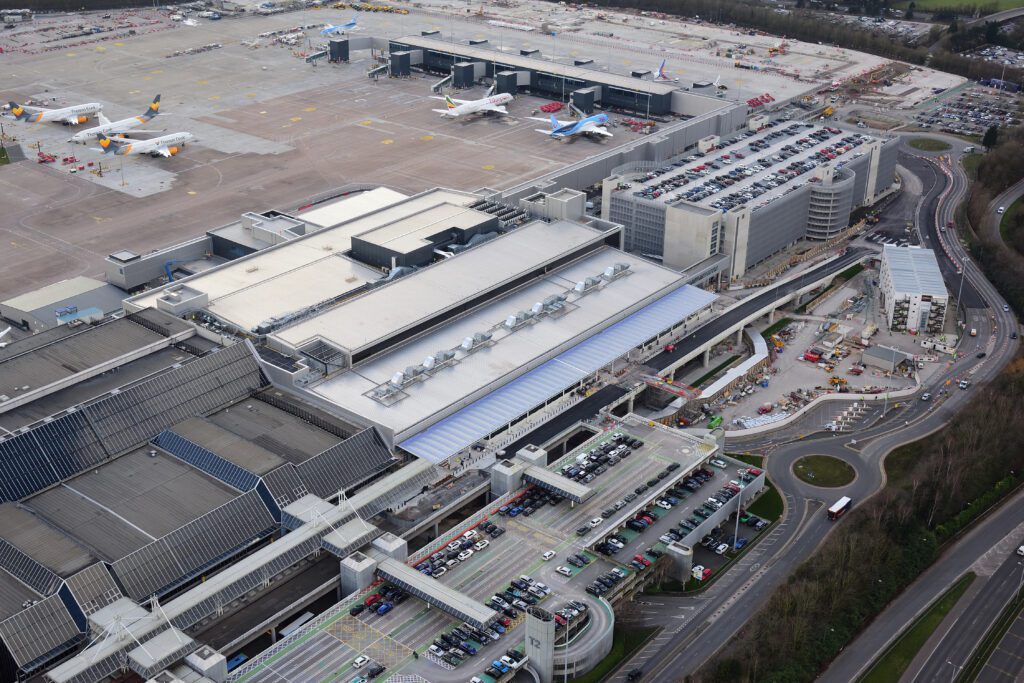
Working in partnership with Manchester Airports Group since 2015, our comprehensive architectural strategy has increased annual passenger capacity by 30% – whilst expanding the terminal’s size by 150%.
The transformation was achieved without significantly disrupting operations, with millions of passengers continuing to travel through the airport throughout the construction programme.
Strategic Vision Over Simple Expansion
The programme’s success began with Pascall+Watson challenging conventional thinking. Rather than simply delivering the original brief for four immediate new piers, the practice conducted comprehensive passenger flow modelling that revealed a more intelligent approach. This strategic reimagining created a phased expansion that controlled capital expenditure whilst delivering superior operational outcomes and passenger experience.
Two Phases, One Cohesive Vision
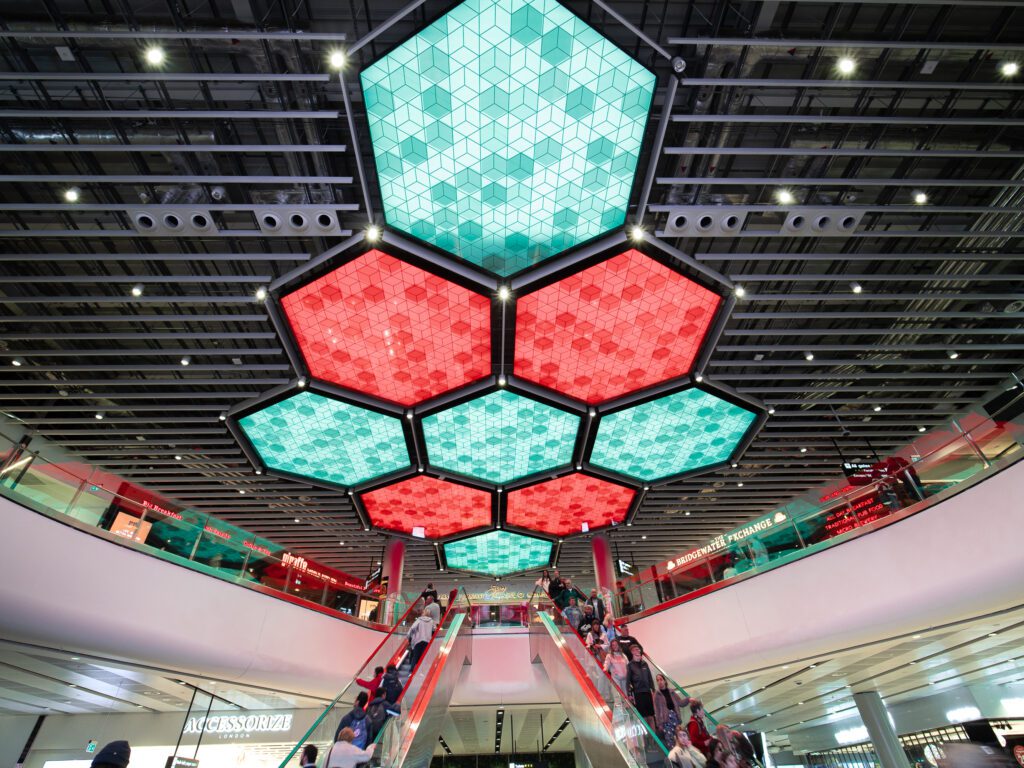
Phase One (2017-2021) delivered an 81,000m² terminal 2 extension with new aircraft pier, establishing a new architectural language for the airport. The design quality earned recognition in the Prix Versailles awards for cutting-edge architecture, securing Manchester Airport a coveted place on the World’s Most Beautiful Airports list.
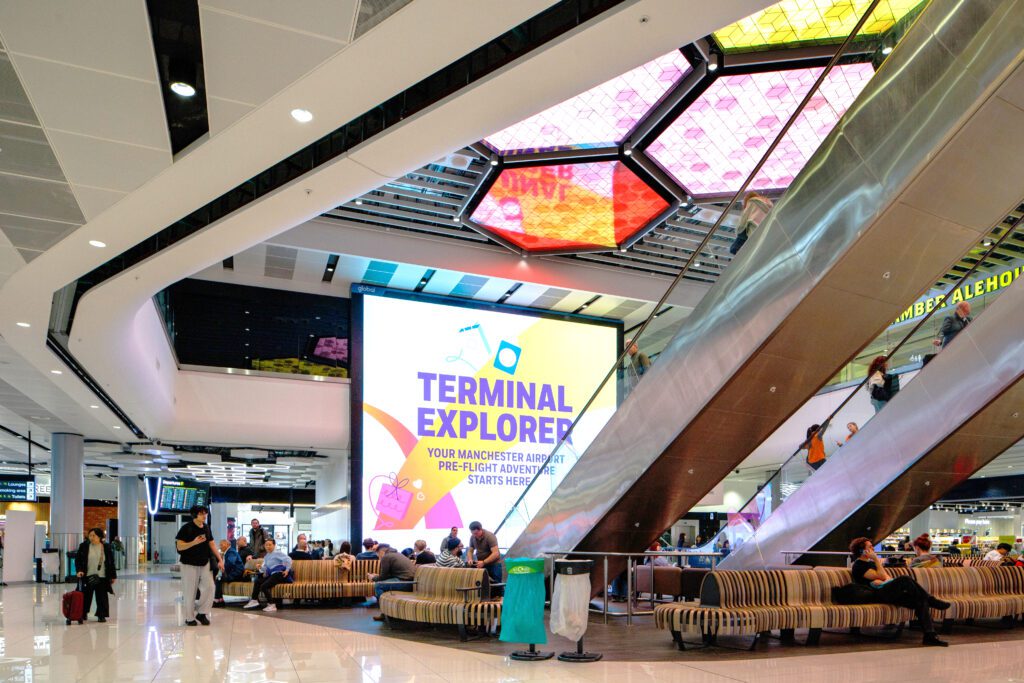
Phase Two (2022-2025) transformed the original 1990s terminal 2 through sophisticated retrofit and expansion. Pascall+Watson’s design extended the international departure lounge, completely reimagined the check-in hall, and created seamless integration between old and new spaces, establishing a distinctive Manchester Airport identity throughout.
Designing for the Passenger Journey
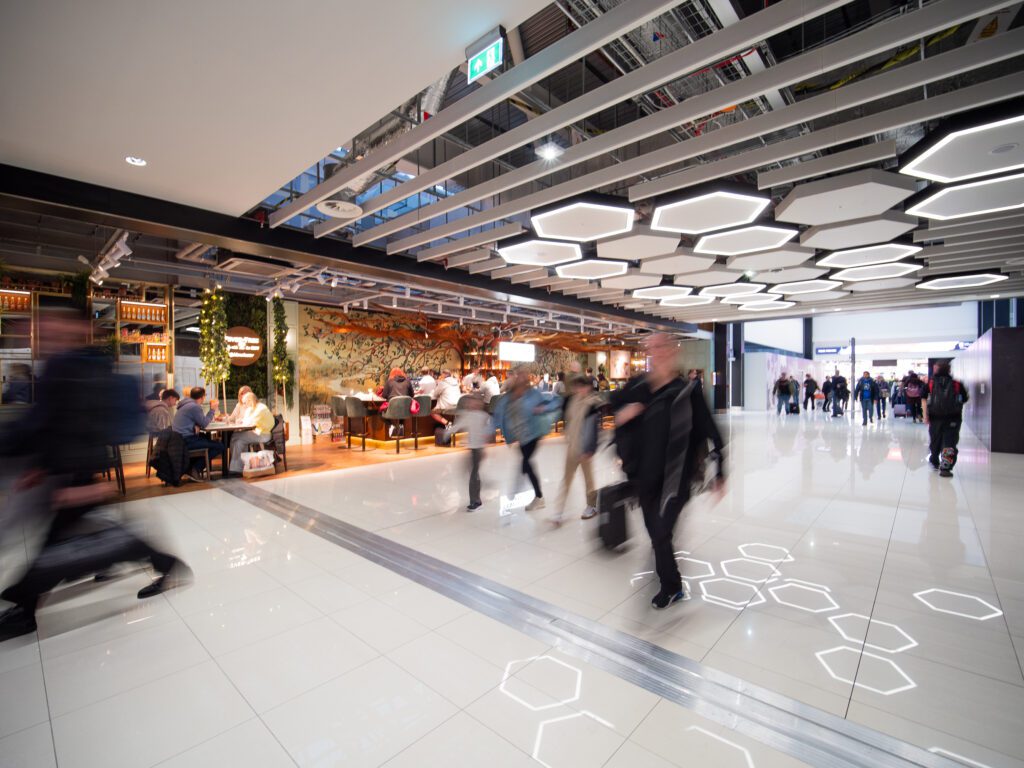
At the programme’s heart was Pascall+Watson’s commitment to revolutionising passenger experience. The architectural design creates intuitive wayfinding through spatial planning and built form rather than signage alone, guiding passengers naturally through their journey.
Dynamic passenger flow modelling validated spatial arrangements before construction, whilst Virtual Reality experiences allowed stakeholders to walk through passenger journeys before completion. This evidence-based design approach ensured that architectural decisions reflected operational realities and delivered measurable improvements in passenger processing and experience.
The holistic interior design approach established international-standard finishes whilst maintaining operational efficiency through robust, maintainable materials and standardised modular systems that support future flexibility.
Designing in a Live Environment
Perhaps the programme’s greatest architectural challenge was maintaining operational continuity throughout transformation. Pascall+Watson’s carefully phased approach ensured each stage built upon the last without compromising passenger experience. At peak delivery, up to twenty Pascall+Watson team members worked simultaneously on site, problem-solving in real-time across different terminal areas.
A Blueprint for Future Projects
The programme’s functional space planning methodologies have been adopted as operational standards by Manchester Airports Group and are now being deployed by Pascall+Watson at Stansted Airport and other major aviation projects worldwide.
Terminal 2 now stands as a resilient, future-proof hub featuring 13 additional boarding gates, flexible aircraft stands accommodating next-generation aircraft including the Airbus A380, and unified passenger facilities that will serve the North of England for decades to come.